Friday, September 14, 2012

Romney's Success vs. Romney's Greed vs. Romney's Over Ambition
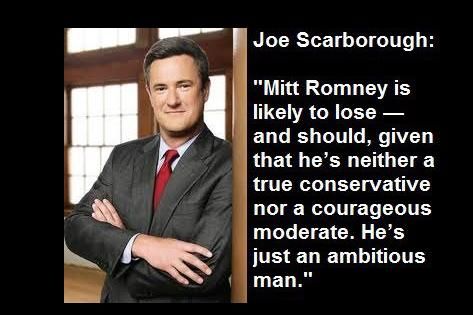

Lawrence  commenting on the above facebook picture, wrote:  Since when is ambition a bad thing? Do you think Obama ran for President because he was not ambitious?
My reply to him was: Oh yes, ambition seems like a good thing to those who believe that success is all about one’s accumulation of THINGS like $$$$. Success to a Thinking person has many aspects, the least of which is amassing material wealth.(which actually falls into a catagory more like GREED.) thinkingblue
CASE IN POINT:
overambitious adj Excessively ambitious; the aims were overambitious, therefore few were achieved…

Excerpt: The Mitt Romney campaign, defending his smirk-a-thon:

Questions & Answers:
Don’t you think it was appropriate for the embassy to condemn the controversial movie in question? Are you standing up for movies like this?
– Governor Romney rejects the reported message of the movie. There is no room for religious hatred or intolerance.
Hmm. "No room for religious hatred or intolerance." Gee, why does that sound so familiar? Oh yeah. Because that's what the U.S. Embassy in Egypt said yesterday.
Keeping in mind that the embassy's statement was not about the attack on the American consulate in Benghazi—and that for Romney to characterize it as such is false—note that it says basically the same thing that the Romney campaign is now saying. "Respect for religious beliefs is a cornerstone of American democracy," the statement read. "We firmly reject the actions by those who abuse the universal right of free speech to hurt the religious beliefs of others."
So if Mitt Romney "rejects" the movie ... and the U.S. Embassy statement "rejects" the movie ... then what the hell was this whole episode about?
The only answer that I can come up with that makes any sense is that it was about Mitt Romney's unbridled ambition—and his complete lack of judgment. In other words, yes, Mitt Romney is unhinged. And perhaps part of the explanation for that can be found in this fact: Gallup's latest tracking poll has Mitt Romney down by seven full points. MORE HERE: http://www.dailykos.com/story/2012/09/12/1130901/-Wait-after-all-that-now-Mitt-Romney-is-condemning-the-movie
~~~

The Difference Between Greed and Success
The general perception in the US, thanks to the media largely, is that success and greed are one and the same. But the difference is huge. Both might result in wealth for those striving for their goals, but the intentions are what make a big difference.
Greedy people look for power and any means to achieve that power is fair game, to them. History is replete with many examples ranging from Hitler to Saddam. Some people would say that Bill Gates is also greedy and indeed he has great power and wealth.
The difference is that Bill Gates obtained his wealth by providing a service or product to people that they voluntarily wanted. Competitors might not agree as to his benevolence and indeed he was a hard charging business man. But he became successful because he offered a product that people wanted.
Greed is defined by Wikopedia as “an excessive desire to possess wealth or goods.” That is interesting but not too helpful in that who is to decide that something is excessive. I would go further and say that a greedy person has the desire to possess wealth or goods and that person is willing to subjugate others to obtain that wealth.
MORE HERE http://www.cavemannews.com/TheDifferenceBetweenGreedSuccess.htm

Labels: , , , , , , , , ,

Monday, August 27, 2012

The Voter ID Law 2012 or Jim Crow Rides Again

Labels: , , , , , , , , , , , ,

Friday, July 06, 2012

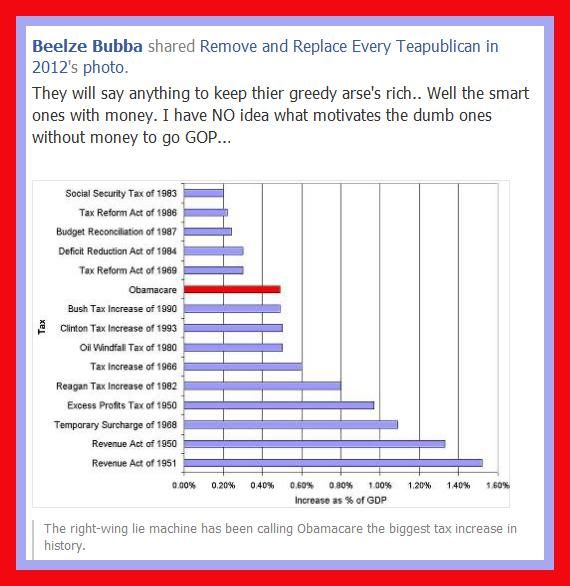
Teapublicans Out In Force Doing What They Do Best: LIE!

Now, we who THINK, have to go around spreading the Truth to counteract their lies. I wish the good people of America would not be so easily fooled into becoming Teapublican stooges and vote against their own best interests. Please watch Al Sharpton on Political Nation to get the facts. I wish it was that easy, but I know they have been lulled into a trance to believe whatever comes from the lips of a lying Teapublican as the HOLY TRUTH. thinkingblue
PS: It really should be against the law to be so ignorantly uninformed, as to believe the misleading, unfactual lies that the dastardly spread around without conscience; these low information voters should be fined (TAXED) for believing such unabashed and blatantly false Teapublican mendacity.

1. By 2022, the Congressional Budget Office estimates the Affordable Care Act will have extended coverage to 33 MILLION AMERICANS who would otherwise be uninsured.
—
2. Families making less than 133 percent of the poverty line — that’s about $29,000 for a family of FOUR (4)— will be covered through Medicaid. Between 133 percent and 400 percent of the poverty line — $88,000 for a family of four – families will get tax credits on a sliding scale to help pay for private insurance.
3. For families making less than 400 percent of the poverty line, premiums are capped. So, between 150% and 200% of the poverty line, for instance, families won’t have to pay more than 6.3 percent of their income in premiums. Between 300 percent and 400 percent, they won’t have to pay more than 9.5 percent. This calculator from the Kaiser Family Foundation will let you see the subsidies and the caps for different families at different income levels.
4. When the individual mandate is fully phased-in, those who can afford coverage — which is defined as insurance costing less than 8 percent of their annual income — but choose to forgo it will have to pay either $695 or 2.5 percent of the annual income, whichever is greater.
5. Small businesses that have fewer than 10 employees, average wages beneath $25,000, and that provide insurance for their workers will get a 50 percent tax credit on their contribution. The tax credit reaches up to small businesses with up to 50 employees and average wages of $50,000, though it gets smaller as the business get bigger and richer. The credit lasts for two years, though many think Congress will be pressured to extend it, which would raise the long-term cost of the legislation.
6. Insurance companies are not allowed to discriminated based on preexisting conditions. They are allowed to discriminate based “on age (limited to 3 to 1 ratio), premium rating area, family composition, and tobacco use (limited to 1.5. to 1 ratio).”
7. Starting in 2018, the law imposes a 35 percent tax on employer-provided health plans that exceed $10,200 for individual coverage and $27,500 for family coverage. The idea is a kind of roundabout second-best to capping the tax code’s (currently unlimited) deduction for employer-provided heath insurance. The policy idea is to give employers that much more reason to avoid expensive insurance policies and thus give insurers that much more reason to hold costs down.
8. The law requires insurers to spend between 80 and 85 percent of every premium dollar on medical care (as opposed to administration, advertising, etc). If insurers exceed this threshold, they have to rebate the excess to their customers. This policy is already in effect, and insurers are expected to rebate $1.1 billion this year.
9. The law is expected to spend a bit over $1 trillion in the next 10 years. The law’s spending cuts — many of which fall on Medicare — and tax increases are expected to either save or raise a bit more than that, which is why the Congressional Budget Office estimates that it will slightly reduce the deficit. (There’s been some confusion on this point lately, but no, the CBO has not changed its mind about this.) As time goes on, the savings are projected to grow more quickly than the spending, and CBO expects that the law will cut the deficit by around a trillion dollars in its second decade. Here’s its graph, which covers the period between 2012 and 2021:
The ACA’s taxes and spending cuts make it a slight deficit reduce in its first decade. (CBO)
10. In recent years, health-care costs have slowed dramatically. Much of this is likely due to the recession. Some of it may just be chance. But there’s also evidence that the law has accelerated changes in the way the medical system delivers care, as providers prepare for the law’s efforts to move from fee-for-service to quality-based payments.
11. The law’s long-term success at controlling costs will likely hinge on its efforts to change the way health care is delivered, most of which have gotten very little attention. They include everything from encouraging Accountable Care Organizations to spreading medical homes to penalizing hospitals with high rates of preventable infections to creating an independent board able to quickly implement new reforms through the Medicare system. A partial list of these efforts can be found here.

Labels: , , , , , , , , , ,